Inside Singapore’s largest silver vault: How is the metal stored and handled?
[SINGAPORE] It’s not just gold; interest in silver has also picked up among investors here and globally.
The white metal’s price crossed US$100 per troy ounce on Jan 23. Since then, though, volatility in the prices of precious metals, including gold, has spiked.
Silver has fallen after a fierce rally at the beginning of the year, last trading at about US$69 per troy ounce on Friday (Feb 6) morning.
Still, OCBC has revised its silver price estimates upwards, to US$117 per troy ounce for end-March and US$134 per troy ounce by the end of 2026. The forecasts previously stood at US$76 and US$81, respectively.
Such optimism has benefited players working with precious metals in the Asia-Pacific, from vault owners to banks in Singapore.
Investors may wonder how the commodity is kept, stored and handled. The Business Times spoke with the founder of Singapore’s largest silver vault, Silver Bullion Group, to find out.
Navigate Asia in
a new global order
Get the insights delivered to your inbox.
Watch this video for more on how the silver vault operates, as well as for a tour of the vault.
Founded in 2009, Silver Bullion is behind The Reserve, a 180,000 square foot secure vaulting facility in Singapore’s Changi South Street.
It has the capacity to store 500 million troy ounces of silver and gold in the city-state.
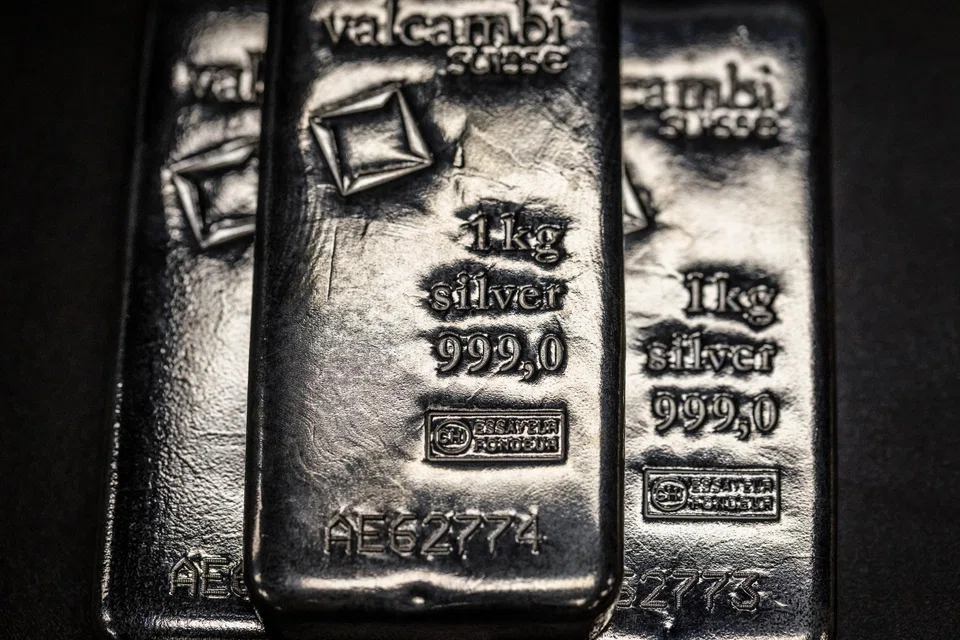
Around 10 per cent of investors holding precious metals at The Reserve are Singaporeans. The rest come from other countries such as the US, Europe and Australia.
Gregor Gregersen, founder of Silver Bullion Group, told BT that the company’s sales of physical silver rose by three to four times in 2025, from the year before.
“We’ve added 4.5 million ounces of silver recently, which is close to 0.5 per cent of total world production of the metal,” he said.
But buying and storing silver at physical vaults isn’t the only investment method gaining traction. Digital products by local banks that help users invest in the metal have also become popular.
Accounts that allow for investments in precious metals, such as those offered by UOB and OCBC, have garnered attention from Singaporean investors.
Ng Lee Peng, head of digital business for Singapore at OCBC, said investments in silver via the lender’s Precious Metals Account grew 200 per cent year on year in 2025.
Costs of storage
Are there any benefits of one investment mode over the other?
One thing investors should bear in mind is the cost of storing physical silver. Gregersen explained that such storage fees are typically higher than those for gold, as the white metal is less dense and takes up significantly more space.
Storage-related fees range between 0.25 and 0.35 per cent of gold investments. The figure is double for silver purchased at The Reserve.
Gregersen shared that most of The Reserve’s clients are high-net-worth and ultra-high-net-worth individuals; it also serves some family offices. A small proportion of individual retail investors represent about 10 per cent of The Reserve’s client mix.
“They’re all people who are buying physical metals for systemic wealth protection, rather than just as investments,” he said.
Higher fees could rub the average retail investor – who prioritises ease of access and convenience – the wrong way. This is why more attention has turned to digital accounts, which allow individuals to invest in precious metals via an app.
OCBC’s Ng said investors can open a Precious Metals Account using the bank’s app and buy silver or gold immediately, in amounts as little as one-hundredth of an ounce. UOB’s Silver Savings Account, meanwhile, has a minimum transaction amount of 10 ounces of silver.
“There’s no need to worry about storage, security or insurance as compared with physical (investments), with everything handled digitally,” Ng told BT.
Investors are biting. The number of Precious Metals Accounts opened at OCBC doubled in 2025 from the year before. Silver Savings Account openings at UOB have also risen, by about 10 per cent year on year in 2025.
Ng said there has been an uptick in investors aged below 30 taking up such accounts, with the segment growing about 80 per cent in 2025.
Counterparty risks
However, Silver Bullion’s Gregersen noted that digital silver accounts cannot beat certain strengths of holding physical metals.
“There is a saying in this industry that goes: If you can’t touch it, you don’t own it,” he said. Investing in precious metals such as silver digitally typically offers price exposure, but not direct access to the commodity.
“If a crisis were to happen, (those who buy silver online) may be defaulted on and lose everything. But if you have a physical silver bar, you own it explicitly.”
For Gregersen, an investor’s safest bet is still owning and storing physical silver, given how most individuals invest in commodities to be “risk-proof” during times of uncertainty.
OCBC’s Ng acknowledged that precious metals are not capital-protected and that risks do come with digital investments. Investors should therefore “weigh and determine their risk appetite” before proceeding with any precious metal investment, she said.
“It is important for them to invest prudently and do a dollar-cost-averaging exercise before investing.”
Decoding Asia newsletter: your guide to navigating Asia in a new global order. Sign up here to get Decoding Asia newsletter. Delivered to your inbox. Free.