Kashmir map shows who controls territory in contested Himalayan region
The recent flare-up of the long-running Kashmir conflict has thrust the disputed region back into the spotlight, in the latest test for U.S. foreign policy under President Donald Trump.
An April 22 attack by armed militants killed 26 civilians at Pahalgam in Kashmir. It was the worst such attack India had suffered in nearly two decades and increased diplomatic and military tensions with neighboring Pakistan, which has rejected Indian acusations of any involvement.
What’s at Stake
Kashmir, high in the Himalayas, is home to some 13 million people in total—about seven million in India-administered regions and six million in Pakistan-administered regions. India and Pakistan both claim the area in its entirety, while China is a third, albeit minor, party to the conflict over the resource-rich territory.
The dispute is a complex matter for the United States not only because two nuclear-armed states could go to war, but also because India is an increasingly important strategic partner, Pakistan has been classed as a major non-NATO ally of over 20 years, and China is now the top geopolitical rival whose actions could influence both.
Who Controls What
India governs about 55 percent of the area of Kashmir in the center and south, including the densely populated fertile lands of the Kashmir Valley. Pakistan controls 30 percent, predominantly in the northwest, while China holds the remaining 15 percent in the northeast.
Last month’s attack in the town Pahalgam took place less than 40 miles south of the Line of Control, the 460-mile de facto border separating India- and Pakistan-administered Kashmir.
The Line of Control begins in the southwest at the boundary between India’s Jammu and Kashmir region and what Pakistan calls Azad, or free, Jammu and Kashmir. It ends near the northern border of India’s Ladakh and Pakistan’s Gilgit-Baltistan regions, before the Siachen Glacier—controlled by New Delhi.
To the northeast lies the uninhabited Trans-Karakoram Tract and sparsely populated Aksai Chin, both of which are administered by China as part of its predominantly Muslim far-western region of Xinjiang.
The de-facto boundary where India’s Ladakh meets China’s Aksai Chin is one end of the poorly demarcated Line of Actual Control between the two countries. The Line of Actual Control measures over 2,000 miles in total and includes disputed central and and eastern sectors where India’s northern states meet Chinese-controlled Tibet.
Decades of Discord
The Kashmir conflict dates back to 1947, when British colonial rule in India ended and the subcontinent was partitioned into the sovereign states of India and Pakistan. Jammu and Kashmir, a former princely state claimed by both countries, chose to accede to India later the same year after tribal militias backed by Pakistan moved in, leading to the first Kashmir war between the neighbors.
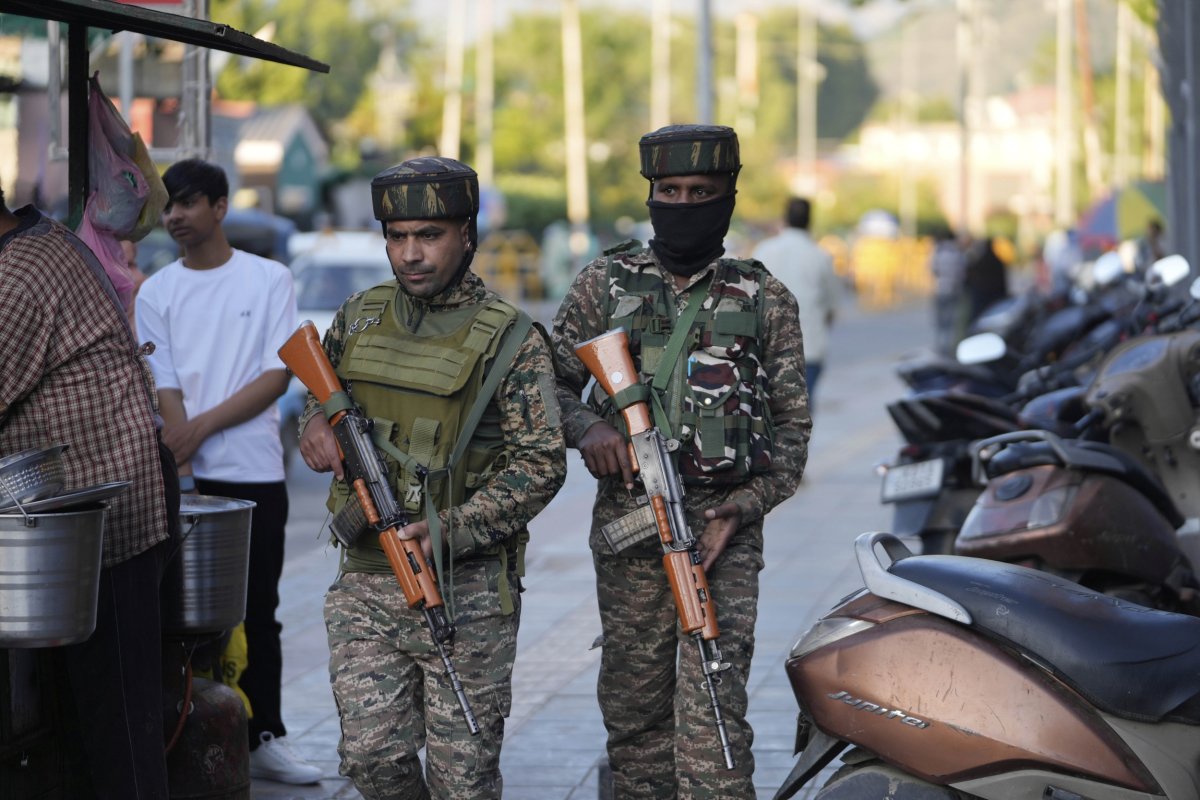
Mukhtar Khan/AP
A ceasefire was brokered by the United Nations in 1949.
War broke out again in 1965 after an infiltration by Pakistani forces into Indian-controlled Jammu and Kashmir, prompting multiple Indian offensives. Despite thousands of casualties, a ceasefire left positions largely unchanged.
The Line of Control was established in 1972 following the Simla Agreement and after another war between the neighbors. It serves as the de facto border between Indian-administered Jammu and Kashmir and Ladakh, and Pakistan-administered territories. While not an internationally recognized boundary, it has been a flashpoint for frequent ceasefire violations and cross-border infiltrations by militants.
Beijing’s formal entry into the Kashmir dispute was marked by a border war with India in 1962, when it solidified the partial control it had exercised over Aksai Chin in the previous decade. A year later, Pakistan ceded the Shaksgam Valley, or most of the Trans-Karakoram Tract, to China in a boundary agreement that India does not recognize.
Indian and Pakistani armed forces fought three major wars over Kashmiri territory in the last century, but the fragile boundaries have seen numerous skirmishes and an ongoing insurgency in India-administered areas. Pakistan rejects Indian accusations that it supports the insurgents, but says it offers moral support for Kashmiri self-determination.
The most recent major confrontation before the Pahalgam massacre was in 2019 when an attack killed at least 40 Indian soldiers in Kashmir. The crisis escalated with airstrikes by both sides and with Pakistan capturing an Indian pilot who was released soon after. The possibility of another hot war now remains a concern to the international community.
India and China have held multiple rounds of dialogue in contested border areas since a bloody clash in 2020 in the Galwan River valley—a melee with sticks and stones rather than guns—claimed the lives of 20 Indian army soldiers and at least four Chinese troops. Beijing says the situation at the border remains stable, while New Delhi says the dispute remains a major irritant to advancing India-China relations.
Where the U.S. Stands
“The long-standing U.S. position on Kashmir is that the territory’s status should be settled through negotiations between India and Pakistan while taking into consideration the wishes of the Kashmiri people,” South Asia specialist K. Alan Kronstadt wrote in a 2020 report for the Congressional Research Service.
“Since 1972, India’s government has generally shunned third-party involvement on Kashmir, while Pakistan’s government has continued efforts to internationalize it,” Kronstadt said.
Secretary of State Marco Rubio‘s calls for Indian and Pakistan leaders to defuse the latest crisis remain in line with existing U.S. policy, as does the White House’s condemnation of terrorism in support of New Delhi.
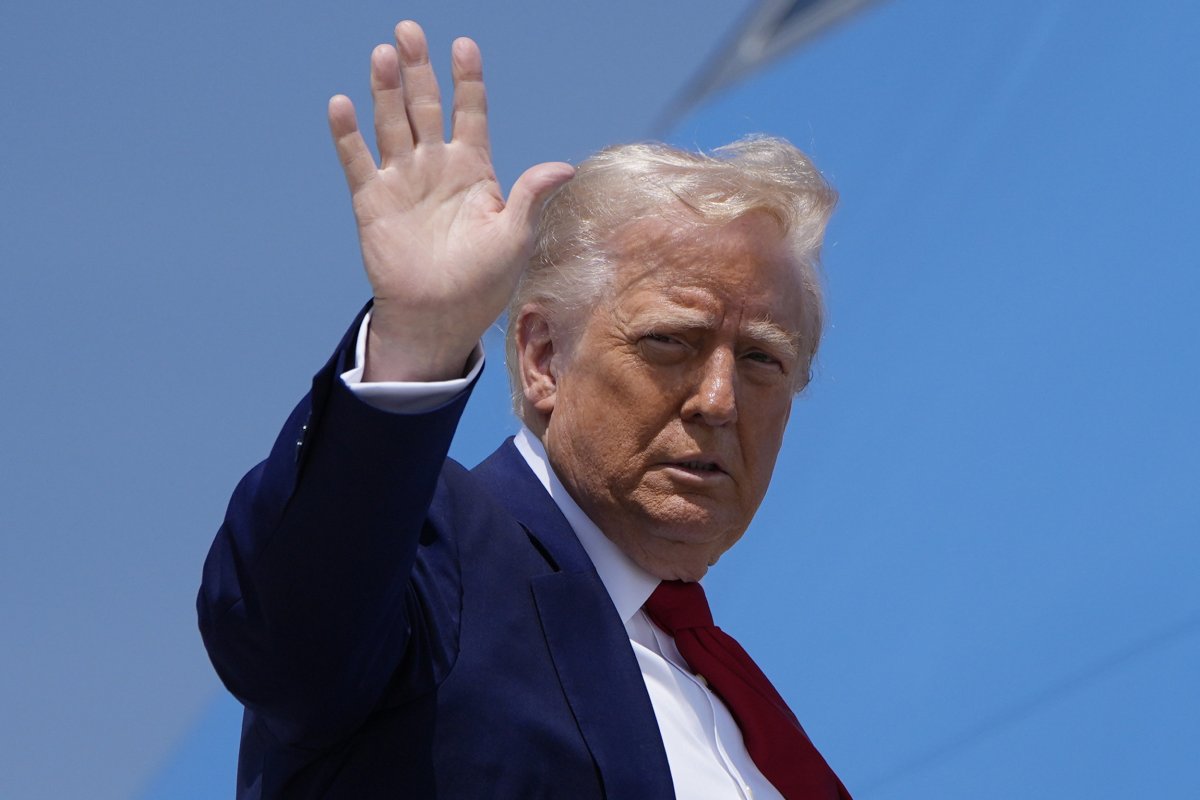
Alex Brandon/AP
Vice President DJ Vance said this week: “Our hope here is that India responds to this terrorist attack in a way that doesn’t lead to a broader regional conflict.”
Trump caused a minor stir during his first presidency when he offered to mediate the Kashmir dispute in 2019. There was no inkling of a similar message this time around.
“Well, I’m very close to India and I’m very close to Pakistan, as you know. They’ve had that fight for 1,000 years in Kashmir. Kashmir’s been going on for 1,000 years, probably longer than that,” Trump said last week.
He added: “But they’ll get it figured out one way or the other. I’m sure of that.”