Sudan’s civil war: The brutal conflict explained after Darfur falls to RSF
[ad_1]
As reports emerge that Sudan’s Rapid Support Forces (RSF) have killed more than four hundred people at a hospital in el-Fasher in Darfur, Newsweek takes a deeper look at the two-year war the United Nations has called one of the world’s worst humanitarian crises.
Yale’s Humanitarian Research Lab has been tracking the simmering conflict for years, having warned the UN Security Council “in July of 2023 that el-Fasher would come under siege and would result in the mass slaughter we are seeing now,” Nathaniel Raymond, executive director of the lab at Yale School of Public Health, told Newsweek.
Humanitarian and research groups have long cautioned that escalating violence was on the horizon in an already unstable region.
When Did the War Break Out?
Sudan‘s civil war has a long and complicated history rooted in the country’s colonial and post-colonial era, and the more recent Darfur War, which started in 2003. However, the recent conflict largely ignited in April 2023, building on a simmering conflict, with many aid groups monitoring, and reporting upon, the situation for years.
A revolutionary coup in 2019 was carried out jointly by the two warring factions, RSF and the Sudanese Armed Forces (SAF). Following ongoing challenges with the transitional government, and power struggles between SAF and RAF, a brutal conflict broke out on April 15, 2023.
The RSF has its roots in the former longtime President Omar al-Bashir’s administration’s integration of predominantly Arab militias, known as the Janjaweed, that aided the government against rebel factions in the Darfur War, which ran from 2003 to 2020, resulting in a peace deal reached by the Transitional Sovereignty Council.
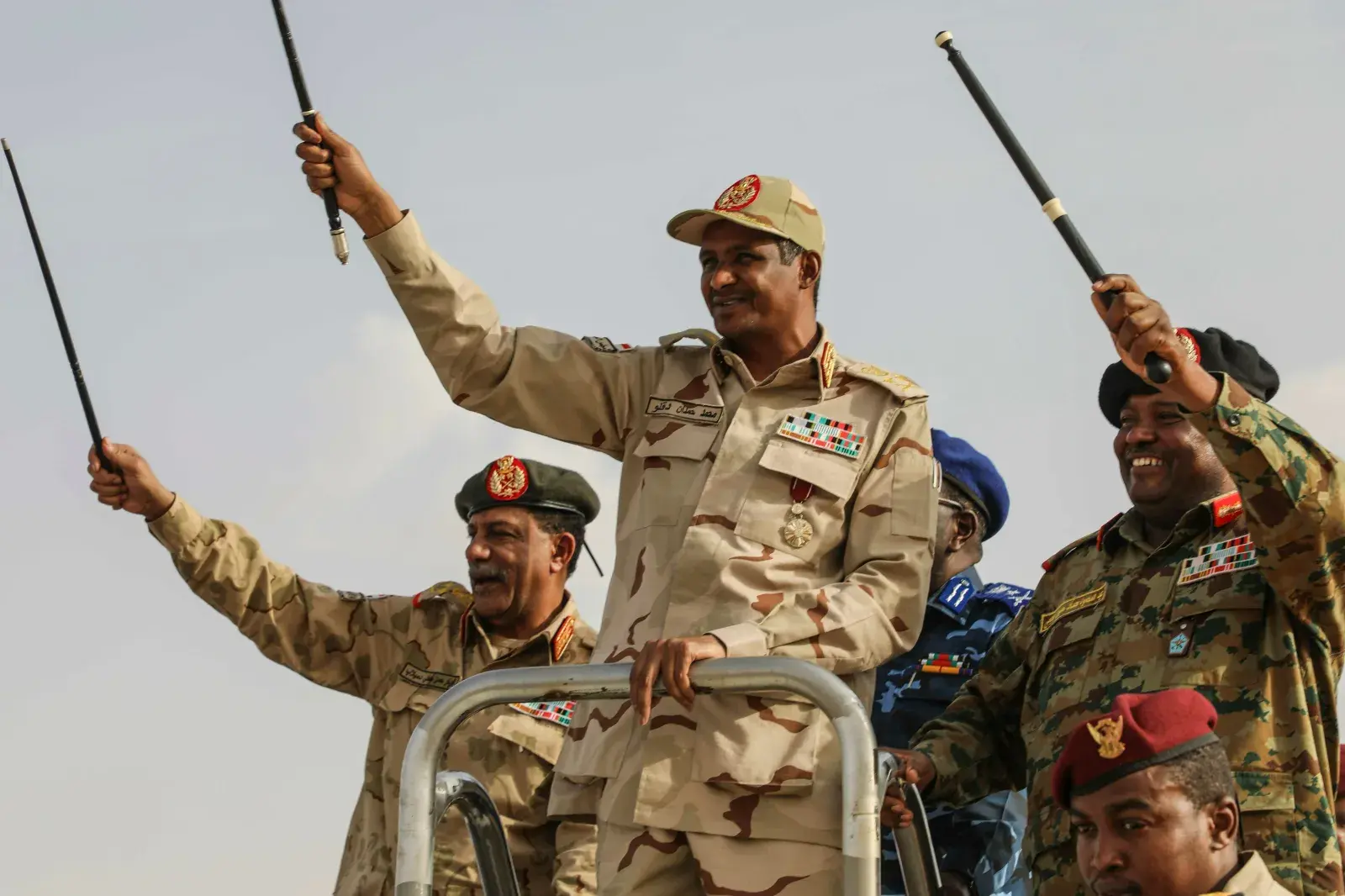
Mohamed Hamdan Dagalo, a member of the leading council, went on to aid President Abdel Fattah al-Burhan’s dissolution of the council, but later came to oppose the move as the rift between two men deepened.
By April 2023, the dispute had evolved into civil war, as the RSF launched a series of attacks against government and military positions nationwide, seizing parts of the country’s capital, Khartoum, and other smaller cities. While the RSF were reportedly routed from the capital earlier this year, Dagalo’s troops have entrenched and advanced elsewhere, with their recent victory in Darfur now effectively dividing the large African nation in two.
The country previously split into two in 2011. South Sudan seceded from Sudan in an acrimonious parting of the ways following a referendum in which 99 percent of South Sudanese backed independence. The border between the two nations remains a point of dispute, and has been closed several times.
International non-governmental organizations and research centers have long warned of the dire crisis in the region. The UN has reported mass famine for years, as well as reporting over 13 million people displaced. The Associated Press reports that 40,000 people have been killed, although international aid groups estimate around 150,000 have lost their lives.
The UN warns that over 30 million people need “urgent humanitarian assistance.” Earlier this week the group said that “260,000 civilians, including 130,000 children, remain trapped under siege in el-Fasher, North Darfur.”
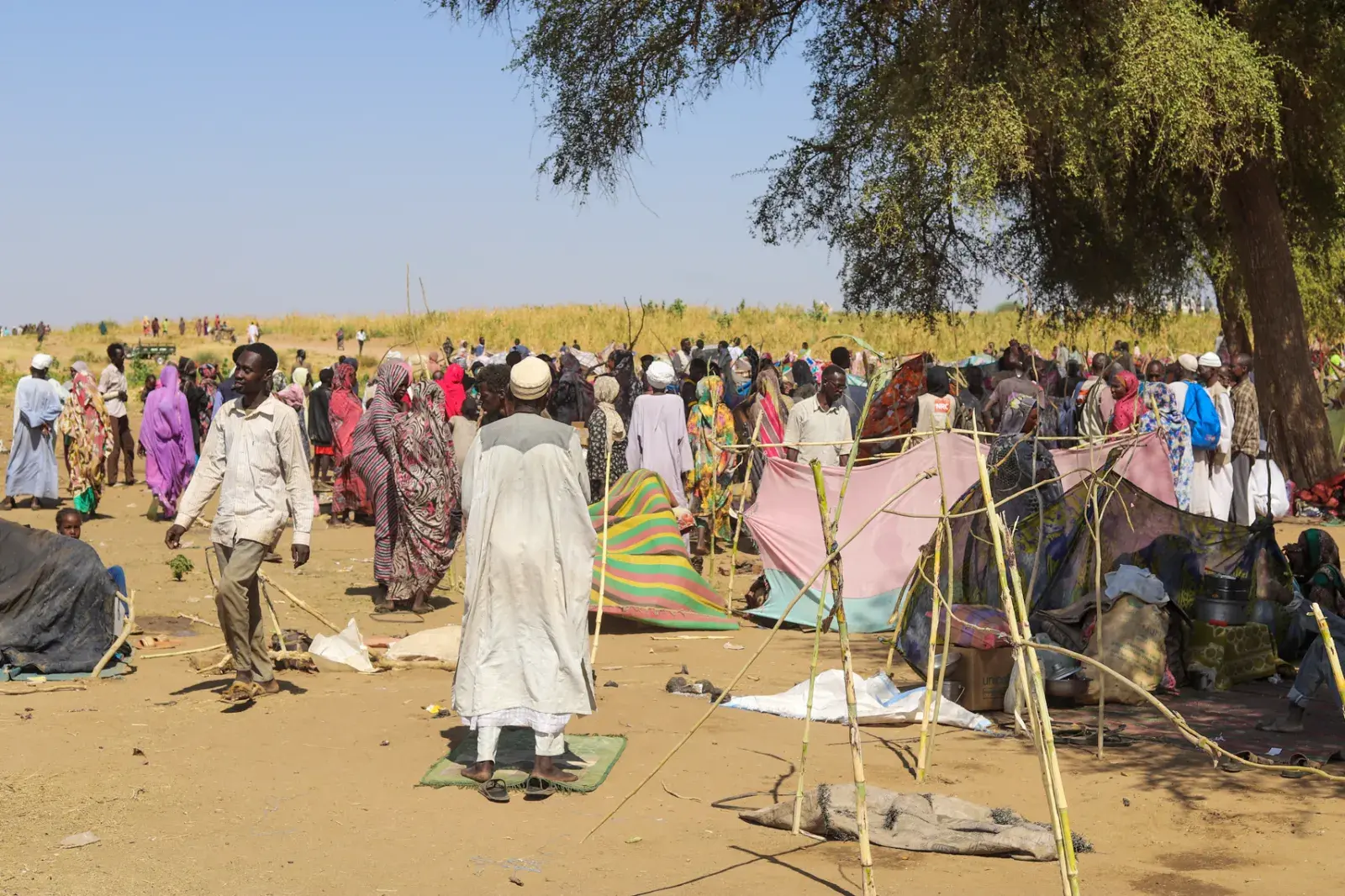
Thousands of people have been living in refugee camps in Darfur, many having fled the early genocide in 2003, seeking protection and support for international aid groups.
Zamzam camp, which is not far from el-Fasher, is one of the largest camps for internally displaced persons (IDP) in Sudan, hosting more than half a million IDPs, with some estimates as high as 800,000 people. It has reportedly suffered severe humanitarian access problems amid the conflict, including attacks by the RSF and blockades that disrupted delivery of food, water and medical aid.
The Hospital Massacre
The World Health Organization (WHO) reported that 460 patients and affiliates were killed at the Saudi Hospital in el-Fasher earlier this week. Yale’s Humanitarian Research Lab noted in a report that RSF fighters continued to carry out mass killings. The group conducts analysis of “very high resolution electrooptical satellite imagery, thermal sensors provided by NASA, and through the use of synthetic aperture radar to detect damage,” Raymond told Newsweek.
The lab said RSF fighters carried out “systematic killings” and attacks on hospitals and aid workers that amount to war crimes.
RSF commander Dagalo has acknowledged “abuses” by his forces and said an investigation had been opened but provided no details. The RSF has been accused of repeated atrocities during the 18-month conflict, including a 2023 massacre in Geneina that left hundreds dead.
Before the latest assault, at least 1,850 civilians had been killed in North Darfur this year, including 1,350 in el-Fasher alone, according to U.N. figures. Aid groups warn that the full death toll from the hospital massacre and wider attack may never be known amid a near-total communications blackout.
The region has also been heavily battered by drought and flooding, which has exacerbated food insecurity, resources, and living conditions for thousands. According to UN agencies, Sudan is the world’s largest child displacement crisis.
External Actors Involved
Recent reports, including the Wall Street Journal citing U.S. intelligence agencies, claim that the United Arab Emirates (UAE) has sent a number of weapons, including drones and arms, to bolster RSF. The UAE’s alleged ties have recently been pushed into the spotlight, with U.S. lawmakers calling on the White House to crack down on weapons shipments, though Emirati officials have repeatedly denied the claims.
“Essentially, it now falls to President Donald Trump, who, for all his talk about being a peacemaker, this is his moment to prove whether he will hold his closest ally, Mohamed bin Zayed Al Nahyan, to account,” Raymond told Newsweek. Al Nahyan is the UAE president and ruler of Abu Dhabi, and has been since 2022.
Raymond added that “what has happened is the West, the United States and the United Kingdom, has chosen to prioritize its relationship, which includes major defense partnerships,” with the United Arab Emirates.
“The war would be over if not for the UAE.” said Cameron Hudson, a former chief of staff to successive U.S. presidential special envoys for Sudan. “The only thing that is keeping them in this war is the overwhelming amount of military support that they’re receiving from the UAE,” he said of the RSF.
The UAE is a key U.S. ally and often involved in negotiation regional peace deals. Other foreign actors supporting the RSF include Ethiopia, Eritrea, Chad. Egypt is backing the SAF, along with reports of Iran and Russia.
What People Are Saying
Alex de Waal, executive director of Tuft University’s World Peace Foundation, told Newsweek for a related story: “Since the earliest days of the current war, it has been clear that the road to peace ran through Arab capitals, particularly Cairo, Riyadh and Abu Dhabi. The belligerents cannot pursue the war at scale without external support and stemming that support is a precondition for making progress.”
A State Department spokesperson told Newsweek for a related story: “The United States continues to engage with our Quad partners to coordinate efforts toward achieving durable peace in Sudan, including implementing the commitments outlined in our September 12 statement. These commitments focus on securing a humanitarian truce, establishing a permanent ceasefire, advancing a transition to civilian governance, and halting external support that fuels the conflict.”
Mathilde Vu, advocacy manager for the Norwegian Refugee Council, which manages the camp in Tawila where many are expected to have fled to, told AP on Thursday: “The number of people who made it to Tawila is very small and that should be a concern for all of us. Where are the others? That tells the horror of the journey.”
David Miliband, president of the International Rescue Committee said in a Wednesday statement: “The fact that we are seeing so few people arriving safely in Tawila should alarm everyone. It raises urgent warnings about what is happening to those trying to flee El Fasher. Safe passage for civilians must be guaranteed, aid must be scaled up and funded now, and all parties must respect their obligation to protect civilians. The world cannot turn away from yet another chapter of horror in Darfur.”
[ad_2]
Source link