Black homeownership rates drop as economist issues DEI warning
[ad_1]
The number of Black households owning their own homes has plunged across the nation, according to new data, in a drop that some economists think may be linked to the Trump administration’s crackdown against diversity, equity, and inclusion (DEI) policies.
The Black homeownership rate fell to 43.9 percent in the second quarter of the year, a new Redfin report found—its lowest level since the fourth quarter of 2021. It was also down from the 45.3 percent recorded a year earlier, showing that the recent slowdown of the U.S. housing market has not helped Black households get onto the property ladder.
Homeownership rates fell among non-Hispanic white households (to 74 percent from 74.4 percent) and Asian/Native Hawaiian/Pacific Islander households (to 62.1 percent from 62.8 percent). By comparison, Hispanic homeownership rose slightly to 48.8 percent from 48.5 percent during the same time frame.
Why Is the Dream of Homeownership Slipping Away From Black Households?
There is likely a connection between falling Black homeownership rates and recently growing unemployment among Black Americans.
The Black/African American unemployment rate, according to data reported by Redfin, was 7.2 percent as of July, up from 6.3 percent a year earlier. It was the highest level of Black/African American unemployment since October 2021—roughly around the same time when Black homeownership also plunged.
Other groups did not suffer the same setbacks in employment rates. The Hispanic/Latino unemployment rate slid to 5 percent from 5.3 percent during the same period, the white unemployment rate stumbled to 3.7 percent from 3.8 percent, and the Asian unemployment rate rose slightly to 3.9 percent from 3.7 percent.
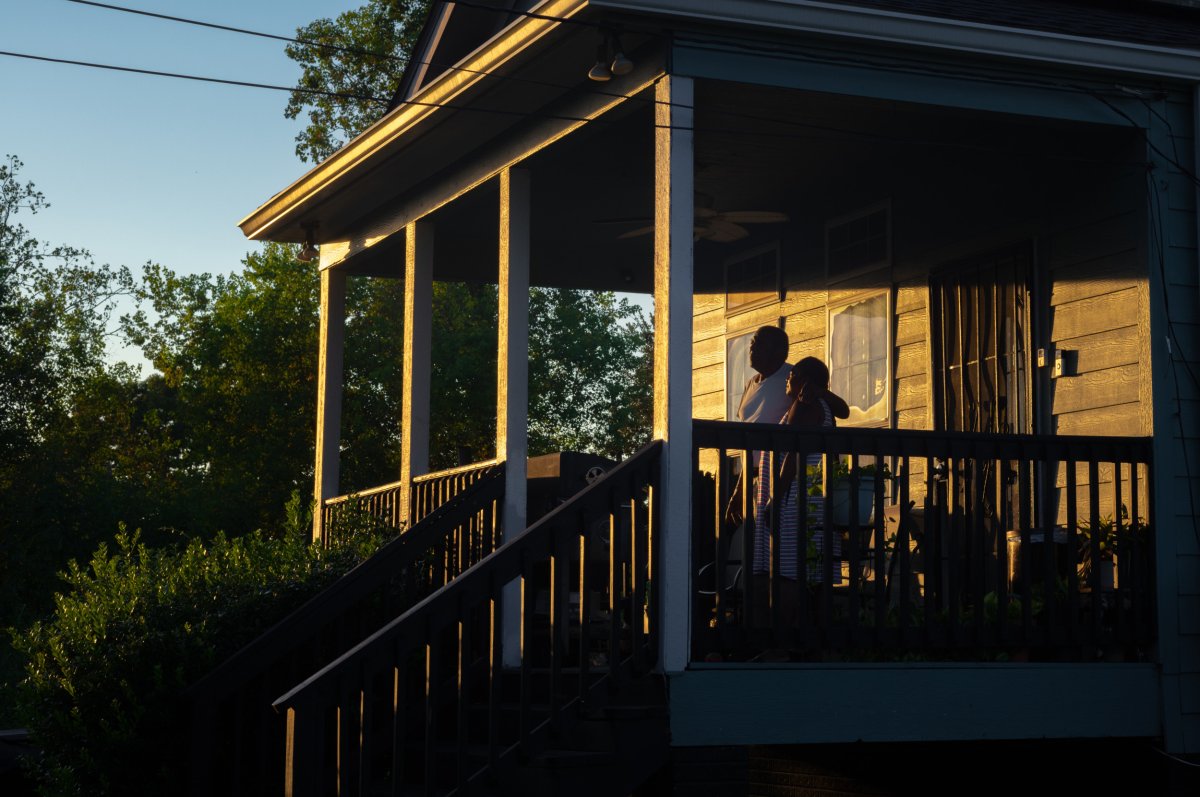
Brandon Bell/Getty Images
“Rising unemployment is one likely reason the homeownership rate for Black families has dropped recently,” said Redfin Chief Economist Daryl Fairweather in the report. According to Fairweather, the Trump administration’s anti-DEI policies have likely played a role in the growing unemployment rates among Black Americans.
“The recent wave of federal layoffs hit Black households badly because government jobs have historically been an avenue of upward mobility for Black workers. DEI programs have also been dismantled in workplaces across the private and public sectors, which may have resulted in fewer Black employees being hired or promoted.”
A Trend That Is Hitting Black Women Hardest
Black/African American women have been hit the hardest by the recent rise in unemployment. According to data from the U.S. Bureau of Labor Statistics, the jobless rate among this category jumped to 6.3 percent in July from 5.5 percent a year earlier. Among Black/African American men, the unemployment rate rose as well—to 7 percent from 6.6 percent—, but not as dramatically.
Since the beginning of the year, Black women’s unemployment rate has risen steadily each month by roughly 0.5 percent to 1 percent, according to the Feminist Majority Foundation.
It is not far-fetched to imagine that Black women’s rising unemployment rate is a result of the Trump administration’s two executive orders against DEI initiatives and DEI hirings. According to 2021 data from the U.S. Office of Personnel Management, Black women represent approximately 12 percent of the federal workforce, while they make up only 7 percent of the overall U.S. labor force.
In July only, the U.S. BLS reported that job cuts in the federal government increased by 5,000. Since January, the federal government is estimated to have lost over 84,000 jobs.
Crucially, Black/African American women usually buy more homes than Black/African American men—meaning that this drop in employment is affecting their ability to become homeowners, and bringing down rates for the entire group.
A 2024 study from the National Association of Realtors (NAR) found that 33 percent of Black/African American homebuyers were single women, while single men represented only 12 percent of Black/African American homebuyers.
Jessica Fulton, a senior fellow at the think tank Joint Center for Political and Economic Studies, told 19th News last month that Black households—and particularly, Black women—are the first sign of a potential strain on the U.S. economy that could soon affect all Americans.
“Black workers, and particularly Black women, show up as a canary in the coal mine, giving a picture of what may happen to everyone else later,” she said.
Will Things Get Better for Black Homebuyers—or Worse?
Black households are not the only ones currently struggling to buy a home in the U.S. Homeownership has slipped out of the reach of millions of Americans, as mortgage rates remain between 6.5 percent and 7 percent, home prices are still near their pandemic peaks in many parts of the country, and other housing costs—including home insurance premiums—are on the rise.
But things are changing in the U.S. market, as sellers are being forced to lower prices in many parts of the country by growing inventory—in part due to the fact that many buyers cannot afford to enter the market—and mortgage rates are finally sliding down.
As the Federal Reserve is widely expected to cut rates this month, the average 30-year-fixed mortgage rate has recently fallen below 6.5 percent, after starting from a peak of over 7 percent at the start of the year.
“Behind the decline in Black homeownership are families who aren’t building stability and wealth through housing,” said Fairweather. “For Black households who feel locked out of the American dream, the good news is that affordability is improving as mortgage rates come down, home prices are growing at less than half the pace they were a year ago, and buyers have been gaining negotiating power.”
[ad_2]
Source link