From AI to overtourism: the future of travel debated at Newsweek summit
[ad_1]
Technology, sustainability and the power of human connection were at the center of a lively debate on the future of travel at Newsweek‘s inaugural New Destinations Travel & Tourism Summit last week.
Newsweek‘s senior staff, including Dr. Adil Ali, head of travel content for New Destinations, senior reporter Soo Kim, and senior editor Eileen Falkenberg-Hull were joined by broadcaster Simon Calder for a wide-ranging discussion with industry experts on the travel sector’s most urgent challenges and opportunities.
More than 120 guests gathered at the event held at The Shard in London, the capital of the United Kingdom, where leaders from around the globe unpacked the forces that are reshaping the travel industry.
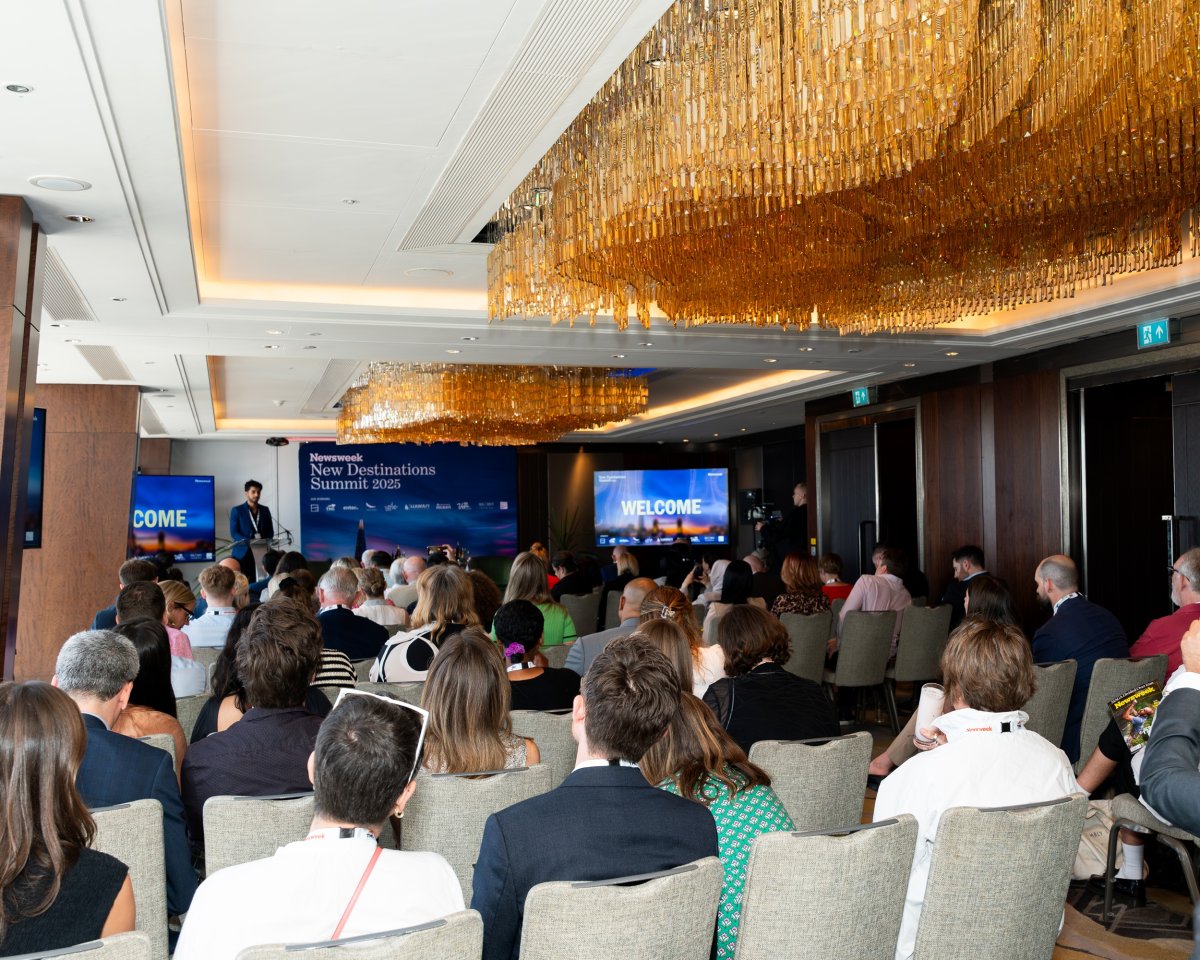
Newsweek via Dolly Shah Photography
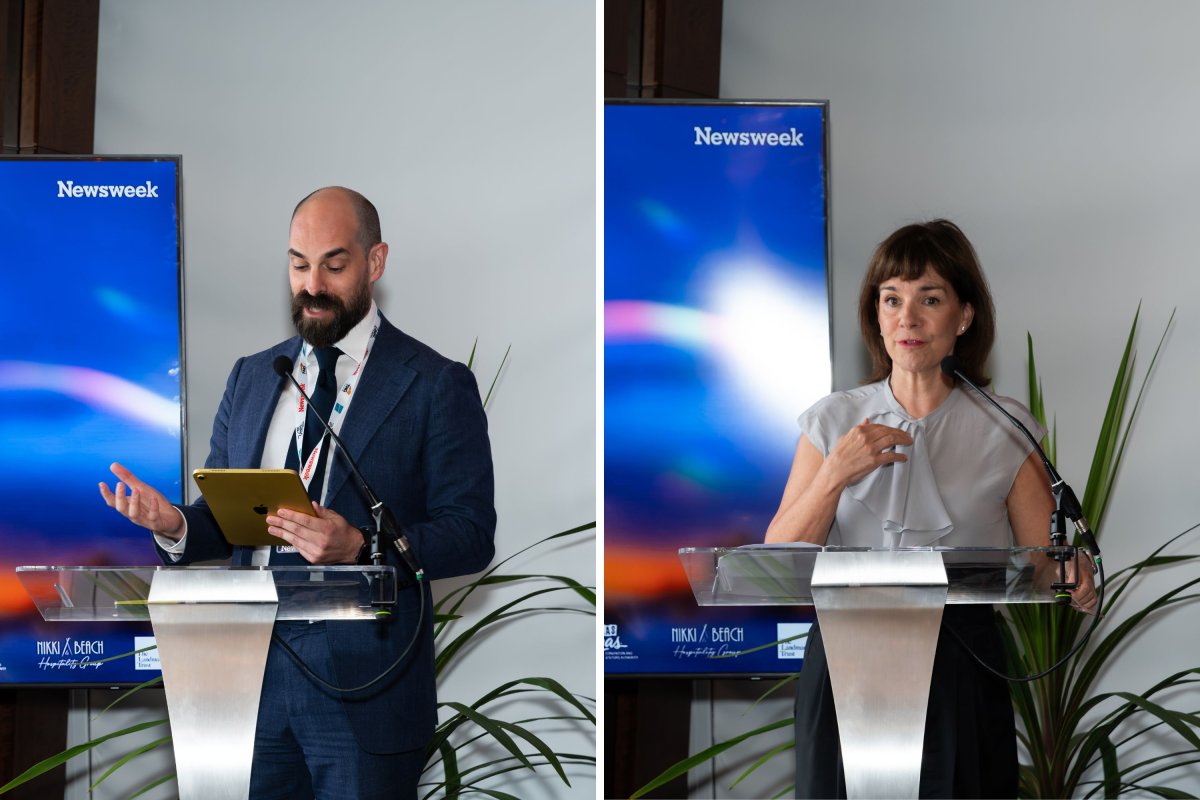
Opening the summit, Amit Shah, executive vice president of Newsweek International, set the tone for the discussions. “At Newsweek, we’ve been telling those stories for nearly a century. But today, that story is changing faster than ever—travelers want deeper, more authentic experiences; destinations want to stay unique and protected; and the industry must balance growth with genuine care,” Shah said.
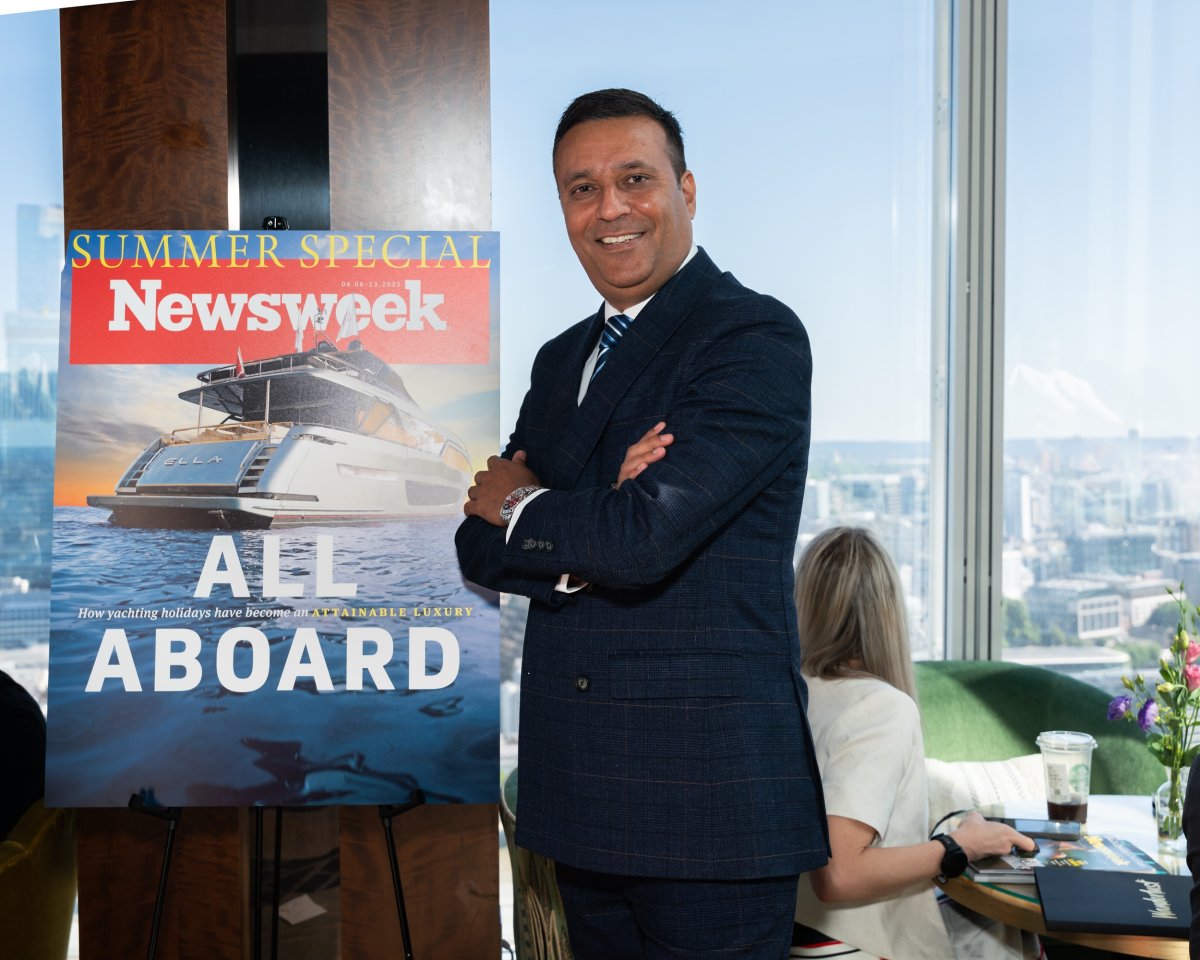
Newsweek via Dolly Shah Photography
Airports as Engines of Transformation
Paul Griffiths, CEO of Dubai Airports, challenged the industry to rethink the airport experience. “Reimagining the airport experience, it shouldn’t be a hard thing,” he said, emphasizing that airports should not be purely transactional spaces. “People don’t have the vision that an airport should be a place of hospitality…a place of welcome,” he added.
Dubai Airports is the authority that owns and operates airports in the city, including Dubai International Airport (DXB), which has ranked as the world’s busiest airport for international passenger traffic since 2014.
For Griffiths, transforming the infrastructure around check-ins and baggage is key. “Why, in the 21st century, are we sticking paper labels on suitcases?” he asked. “Every luggage manufacturer could print a unique barcode on a suitcase…you can track wherever it is in the world.”
Griffiths argued that while technology has advanced rapidly, the aviation sector has lagged in leveraging that potential. “We’re just reaching the limits of human ingenuity in sectors that really do need to change,” he said.
Selahattin Bilgen, CEO of Istanbul Airport, highlighted how airport investment can spark economic growth. “In 2013, Turkey invested in a brand-new place from scratch, and the brave plan to transfer all the operations from a 60 million tax airport to a brand-new airport…That was a real challenge and a brave decision to be taken,” Bilgen said.
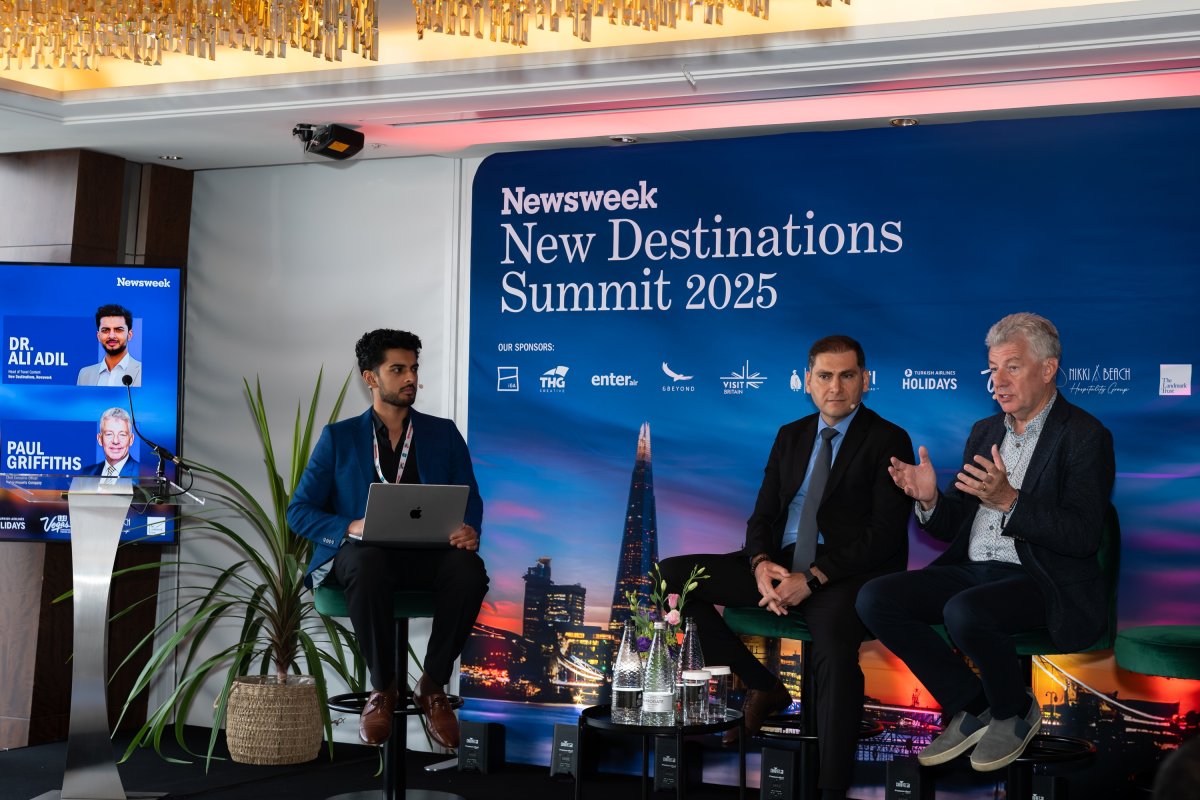
Newsweek via Dolly Shah Photography
Real People vs. AI in Travel Content
Steve Hill, president and CEO of the Las Vegas Convention and Visitors Authority, emphasized the importance of knowing where AI-generated content comes from. “ChatGPT or any AI source has got to get their information from the location…understanding where that information comes from, the accuracy of it, the legitimacy of it matters a lot,” Hill said.
René Frey, CEO of Rough Guides and Insight Guides, pointed to the pitfalls of AI-generated travel advice. “We all know that the guidebooks, they are the source of ChatGPT,” he said. But without updates from people on the ground, “it’s gonna be useless in six months, 12 months,” Frey warned. “Real life is different from AI.”
The Educational Role of Tourism
For Maeve Scanlon, vice president of business affairs at THG Creative, tourism must do more than entertain. “Education is one of the most important things that we have a responsibility to do,” she said. “It’s our responsibility to make sure that we are teaching those correct lessons and working with the community to ensure that we’re spreading the right word, telling the right stories.”
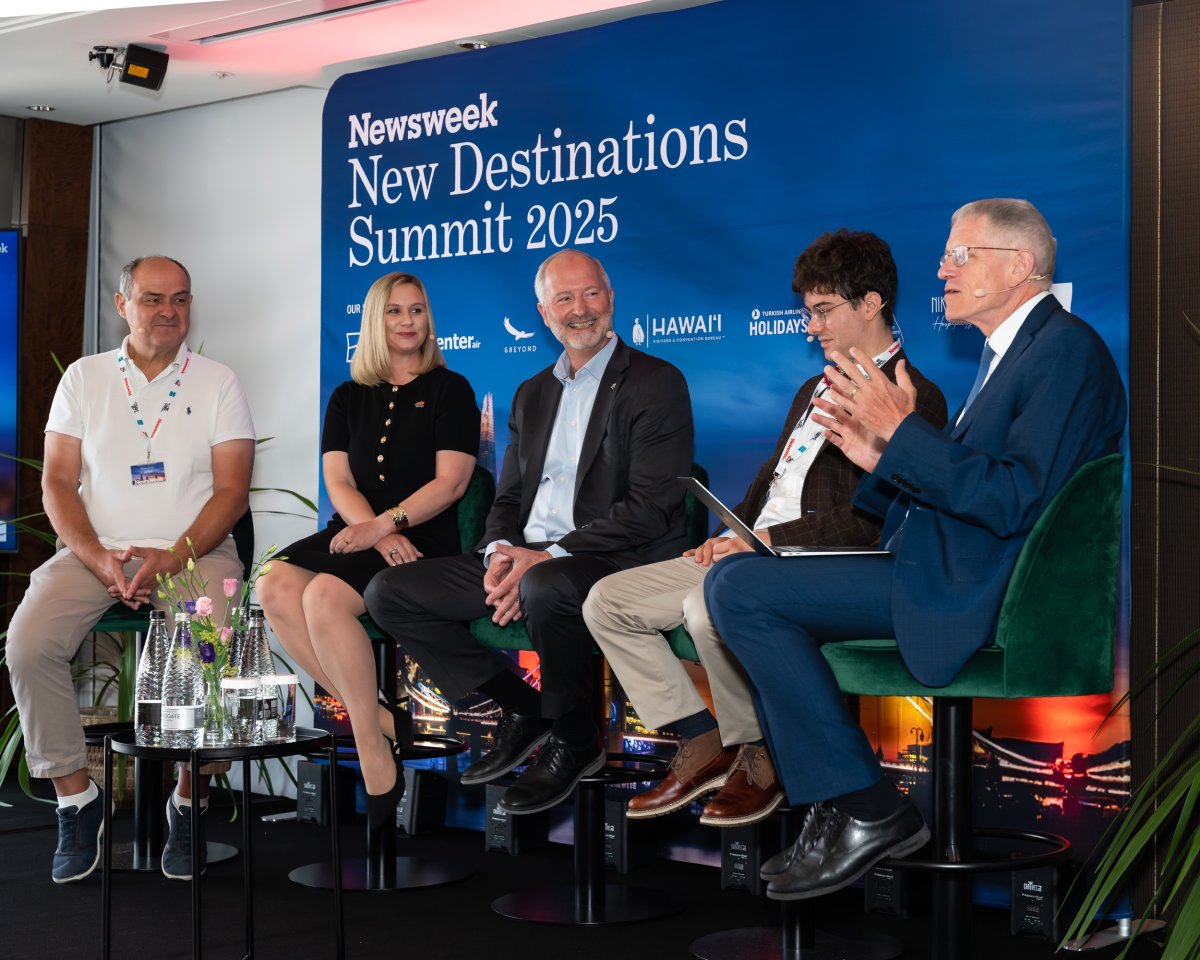
Newsweek via Dolly Shah Photography
Human Connection in a Digital World
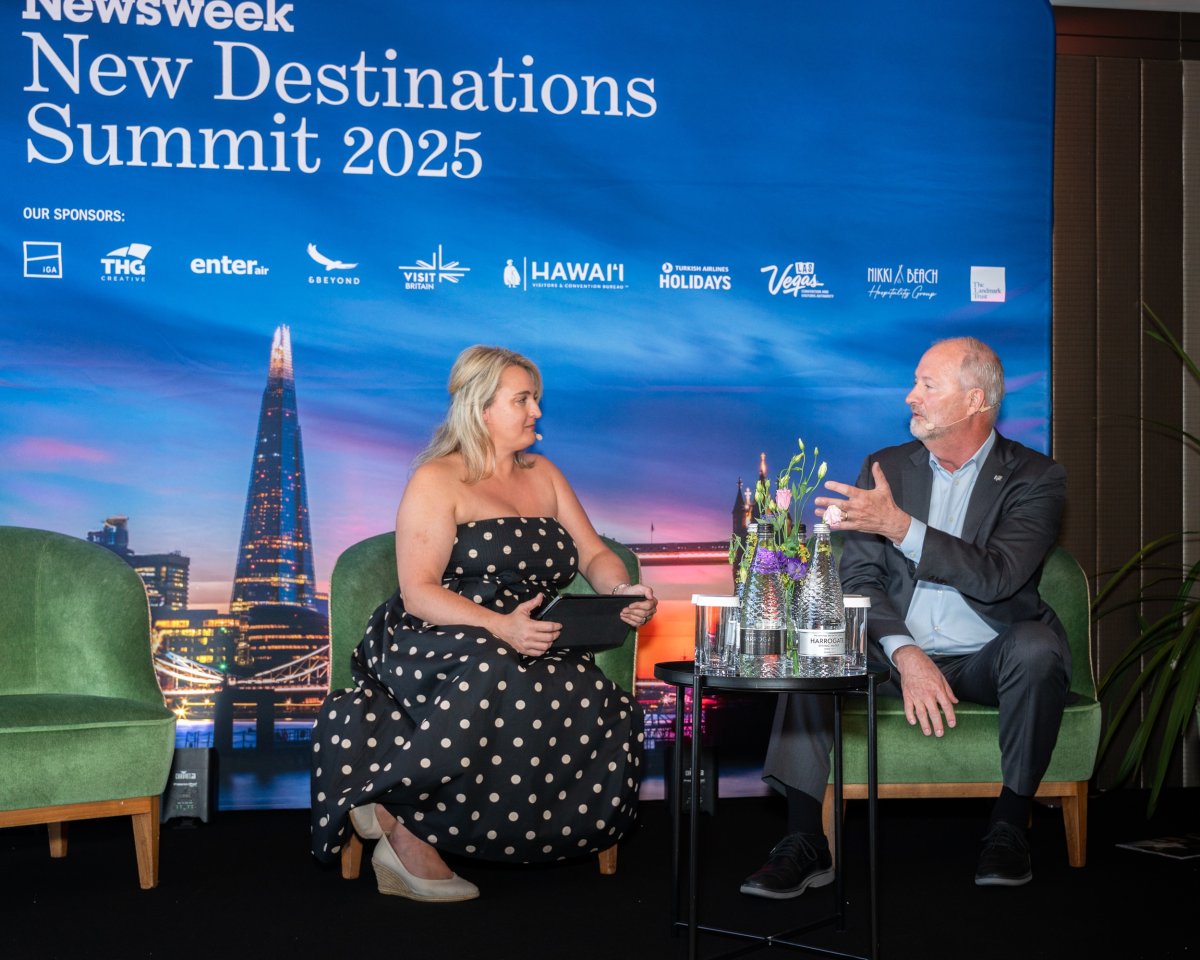
YouTuber and polyglot Arieh Smith, known to his 6.7 million subscribers as @xiaomanyc, addressed the cultural value of learning languages. “Anyone can use Google Translate…but to have taken the effort to learn those words and pronounce it with your actual voice…that’s human meaning,” he said. “You can communicate with another person and a stranger.”
Hill added: “There’s a difference between providing a product and providing a connection. What Arieh does provides a connection to people.”
Newsweek via Dolly Shah Photography
The Shifting Priorities of Travelers
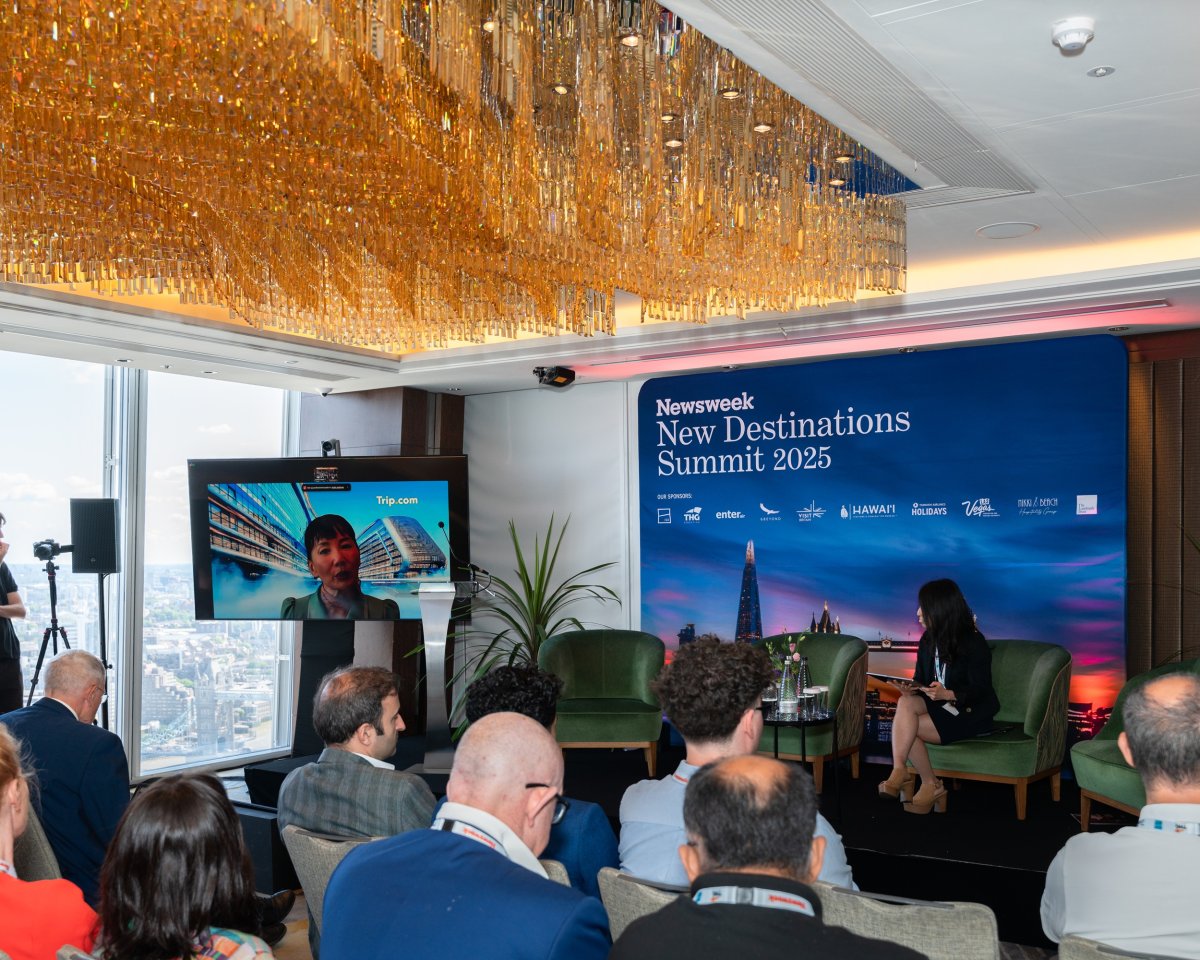
Jane Sun, CEO of the Trip.com Group, highlighted a strong rebound in Chinese travel. “The Chinese market has recovered very strongly…last year, Chinese consumers spent about $250 billion, which is 70 billion higher than the U.S.” Sun said. She noted the popularity of global events among younger Chinese travelers, including the Paris Olympic Games and Taylor Swift concerts.
Sun also observed changing destination trends. “Norway, Iceland and Finland have become very popular for Chinese travelers…South Africa has become one of the destinations that are favored during the Chinese New Year,” she said.
Julia Simpson, president and CEO of the World Travel and Tourism Council, said southeast Asia is now “the fastest growing region in travel and tourism globally.” She also praised Chinese tourists’ “attitude towards lower taxation, the use of tech…WeChat in China…it is extraordinary.”
Newsweek via Dolly Shah Photography
Beyond Buzzwords: Regenerative Travel and Sustainability
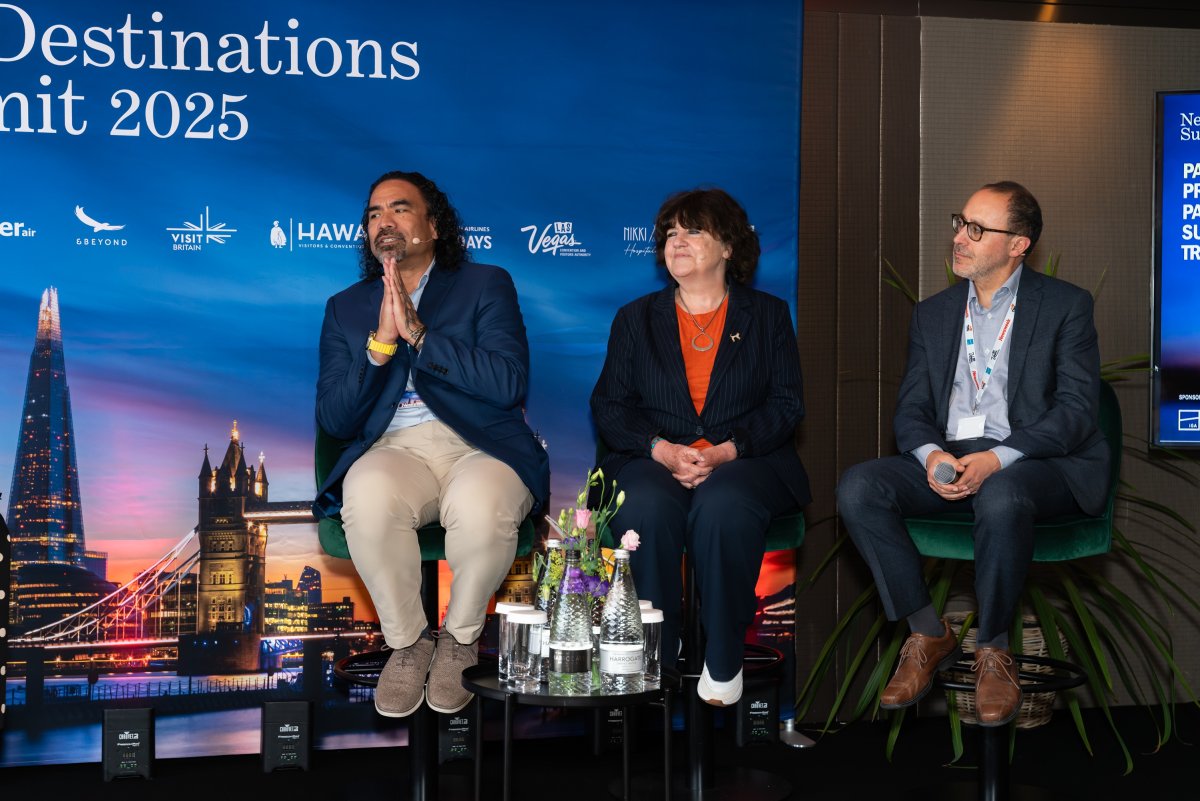
Dr. Aaron Salā, CEO of the Hawaiʻi Visitors & Convention Bureau, critiqued the overuse of the term “regenerative” in travel. “Regenerative is just a current buzz word,” he said. “Regenerative [travel] has to be in the DNA, in the doing of the industry…so that regenerative doesn’t only create an opportunity for advantageous affect on the visitor—it must also create sustainable effect on the environment and community.”
Salā added: “The ecosystem I’m building now must be for profit, it must be generationally linked to generational income…because I have to feed my family” as well as the families of others.
Xavier Font, a professor at the University of Surrey and editor-in-chief of the Journal of Sustainable Tourism, warned of both “greenwashing”—exaggerating claims of sustainability practices—and its lesser-known counterpart “greenhushing”—where businesses downplay sustainability efforts to avoid criticism. “We see that companies are quite often doing both things,” Font said.
Lyn Hughes, founding editor of the Wanderlust magazine, lamented the return of overtourism post-COVID. “We came out of COVID and suddenly we go right back to overtourism…There was even more plastic waste, there was more of everything,” Hughes said.
Font explained: “First-time tourists behave very very differently than repeat tourists,” adding that repeat visitors are “much more respectful of that place.”
Newsweek via Dolly Shah Photography
Planning for Sustainable Growth
Simpson urged governments not to take tourism for granted. Growth “does not happen by accident,” she said. “It takes investment, political will and clever marketing.” Simpson pointed to a projected $12.5 billion drop in international visitor spending in the United States this year as a warning.
“You cannot rest on your laurels and think that people will be coming,” Simpson said. “Too many policymakers assume that tourism will simply look after itself.”
Robin Johnson, global marketing director for Visit Britain, shared a call to action. “The future of tourism must be built together,” he said. “Whether it is advancing sustainability, embracing new technologies or telling our stories with more power and precision—we will succeed through collaboration.”
Newsweek via Dolly Shah Photography
Newsweek’s New Destinations Travel & Tourism Summit was sponsored by İGA (Istanbul Grand Airport), Enter Air, the Las Vegas Convention and Visitors Authority, The Landmark Trust, THG Creative, &Beyond, Nikki Beach, The Hawaiʻi Visitors & Convention Bureau, Koelnmesse GmbH and Holidays by Turkish Airlines.
[ad_2]
Source link